Sustainability at Eda Frandsen Sailing

Our journey to living and working at sea began with a shared love of the ocean. At Eda Frandsen Sailing, sustainability isn’t a box to tick — it’s an ongoing practice of care, learning and responsibility for the places we sail through and call home.
Sailing is, at its heart, a low-impact way to travel.
By harnessing the power of the wind, we significantly reduce our reliance on fossil fuels. While we do carry a diesel engine onboard for safety and manoeuvring, our direct fuel use averages around 1.5 litres of diesel per person per day. This covers propulsion, cooking and heating, and represents a substantially lower carbon footprint than most land-based holidays.
We take a mindful approach to energy and water use onboard. Fresh water is a finite resource at sea, and we average around 100 litres of water per day for 10 people, encouraging thoughtful use through simple, everyday habits. Our onboard systems run on 12v LED lighting and refrigeration, and we have upgraded our battery systems to improve efficiency and reduce engine run-time.
We actively share this information with those that chose to sail with us, believing that understanding how a boat works fosters care for the resources it depends on.
We operate with a better, not bigger, mindset. Our strength lies in scale, slowness and attention — moving gently through fragile environments rather than rushing through them. We recycle all waste onboard, never dispose of rubbish within island communities, avoid farmed salmon products, and prepare as much of our food from scratch as possible to reduce packaging and food waste.
Where possible, we choose suppliers whose values align with our own.
Our beverages are supplied by Vintage Roots, known for prioritising organic, ethical and low-intervention producers. We use Who Gives A Crap toilet paper to reduce plastic waste and support sanitation projects worldwide, and Ecover cleaning products to minimise the release of harmful chemicals into marine environments. Our food is sourced locally wherever possible, including from Letterfinlay Foods and Williamsons Food Services, supporting regional supply chains and reducing food miles while we continue to learn more about suppliers’ environmental practices.
Giving back to the landscapes we depend on is central to our work. Since 2024, we have supported the Knoydart Forest Trust, contributing to native woodland regeneration between Loch Nevis and Loch Hourn. From the water, we see firsthand how vital these forests are for biodiversity, climate resilience and the long-term well being of local communities.
We are also proud members of the Our Seas Coalition, a collective of over 130 organisations campaigning for healthier coastal waters and better protection of Scotland’s seabed. Through learning, dialogue and informed sourcing of seafood onboard, we aim to support fishing practices that respect both marine ecosystems and coastal livelihoods.
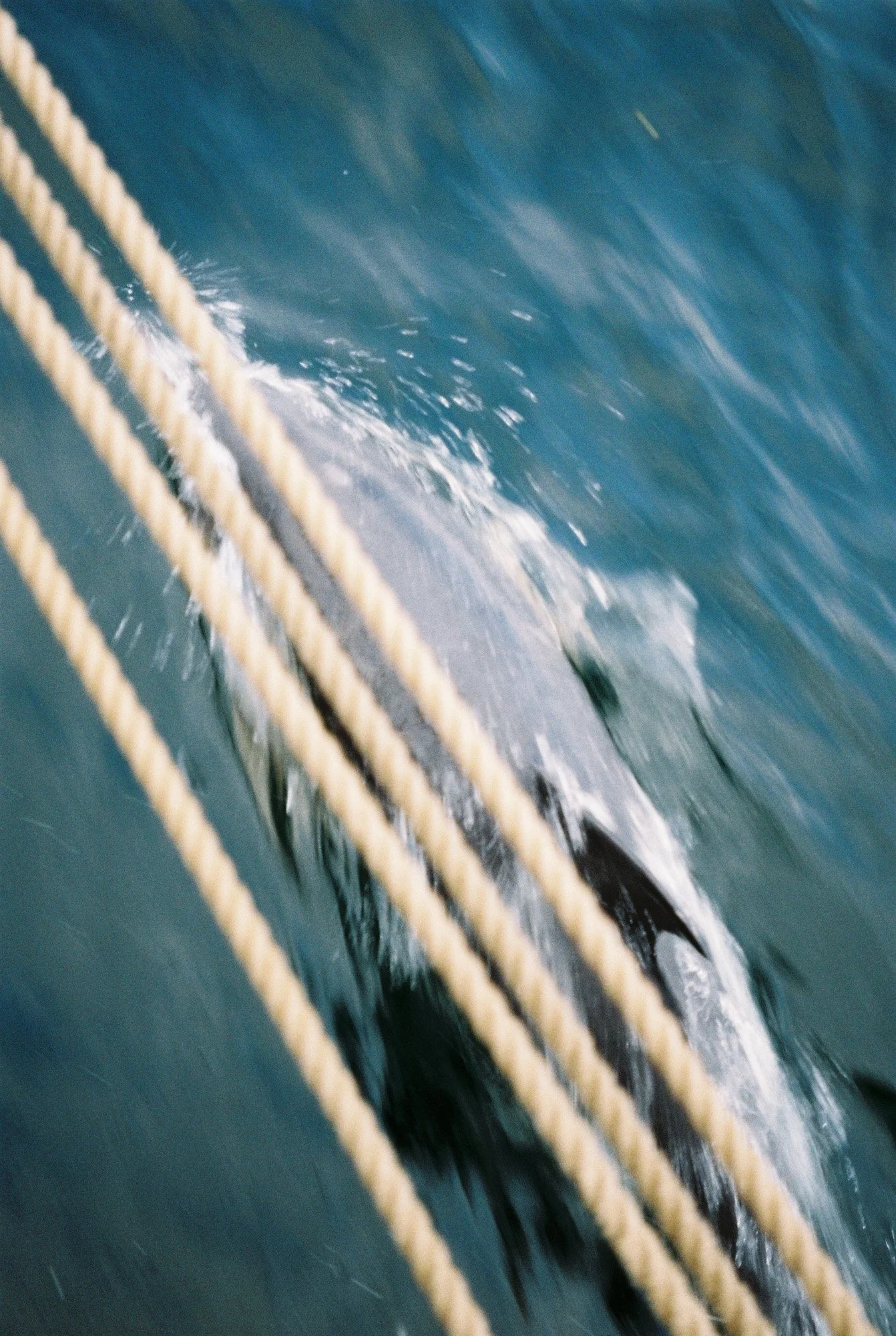
Wildlife encounters are one of the great privileges of sailing. We contribute to marine conservation by logging sightings through the Hebridean Whale and Dolphin Trust (HWDT) tracking app, supporting citizen science that helps protect whales, dolphins and porpoises in Scottish waters.